

2 min readHow You Lead Talent
by Guy Gage | November 14, 2021 | Business, Leadership
“Talent” Is Necessary
When leaders talk to me about their organization, inevitably the discussion quickly moves to their people. Whether they complain that staff are hard to find, motivate and retain, or are enthusiastic about who they have, everyone agrees that firm success is directly linked to their people.
So what’s the difference between those leaders who complain and those who are enthusiastic about their people? Obviously, there are a host of factors that impact firms, but one that I see and hear is how leaders interact with their teams. Do they control or empower? The research is clear.
It is common to talk about the staff in terms of “talent.” But I see talent and workforce as two distinct groups of people. Staff who fall into the “talent” category share three characteristics that are consistently demonstrated; unlike the general workforce.
“Talent” Characteristics
One characteristic of those in the “talent” group is that they take responsibility for themselves. They don’t blame others, their circumstances or other limitations they encounter. They don’t say, “I could be successful if only…” They take on the challenge by assuming responsibility for their own success and their team’s success.
Another characteristic of “talent” is they take initiative. They are not accustomed to wait until told to do something. They see what needs to happen and begin moving, whether it’s prodding their leader for direction or prompting themselves into action. They begin planning to execute before they are told to do so. They make plans in their schedule ahead of time. They may even think through the situation to identify opportunities for efficiency and effective ways of proceeding.
Finally, “talent” takes ownership of their work. They are responsible for their work, that it is completed with excellence and on time. If they lead a team, they are in touch with the others to make sure everyone is progressing. If they lead an engagement, they take ownership of the project’s success, even to the point of managing upward.
“Talent” Empowered
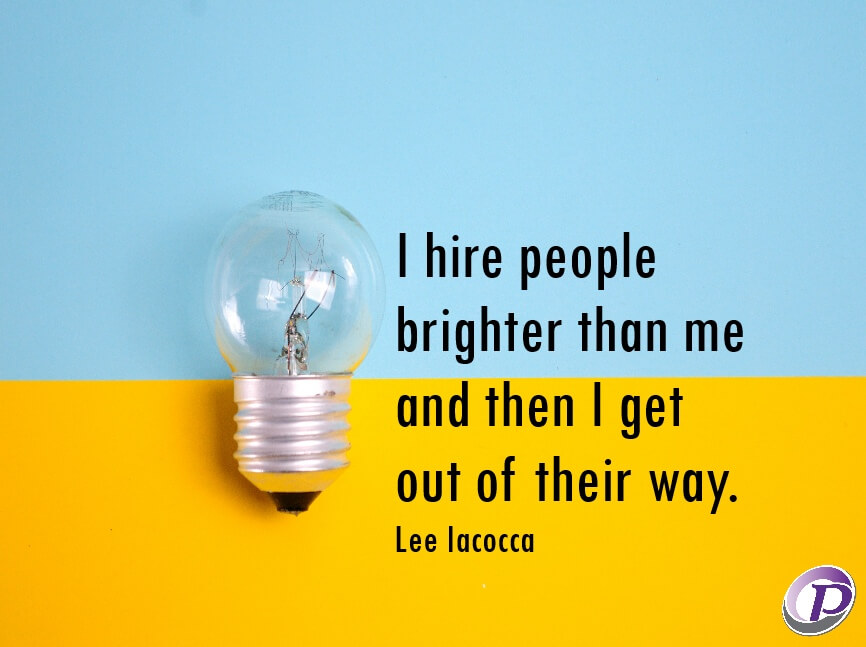
If you are leading talent and you try to control them or their methodologies, you are not leading. True, there are some staff who need to be controlled because they don’t display the characteristics mentioned above. But “talent” needs to be empowered, not controlled. Their motivation, energy and enthusiasm is within them; they don’t need you to micromanage, control or beat them into the way you want them to be. Instead, turn them loose and let them go. Even if they make mistakes, it won’t be because they are lackluster performers. They need your guidance and input, then get out of their way, supporting them at their request.
Leading true talent can be difficult for leaders. Sometimes, because “talent” is mis-led by their leaders, they begin to look like everyone else. That’s because their leader has “controlled” the talent characteristics out of them. When I train and coach, I can sometimes recognize discouraged talent. Very unfortunate.
The point is this: no matter where you are in the food chain, you have opportunities to model, teach and reinforce “talent characteristics.” You not only demonstrate talent, you can raise it up in others.
And that is how you lead talent.
Read Related Blogs:
A Fractured Partner Group
Stressed A professional administrator from a CPA firm visited our sponsor table last week at the CPAFMA Connections 2024 conference in Savannah, Georgia. Her discouragement was evident from her slumped shoulders and shuffling walk. She immediately shared her...
Equipping Managers To Perform
The Transition We learn so much from our coaching clients, like what they really want, what concerns them and what holds them back. Over the years, our experience has revealed a common theme—that transitioning from staff performer to project manager is one of the most...
Be A Strong Supervisor
Yes One of the most difficult situations we can encounter in life is wanting to do well but it’s not coming together. We struggle because there is a gap between our capabilities and what is required to succeed. We encounter this situation in sports, academics, music...