

1 min readAccount For Your Yeses
by Guy Gage | May 27, 2024 | Business, Leadership, Performance, Personal Management

The Cost of Yes
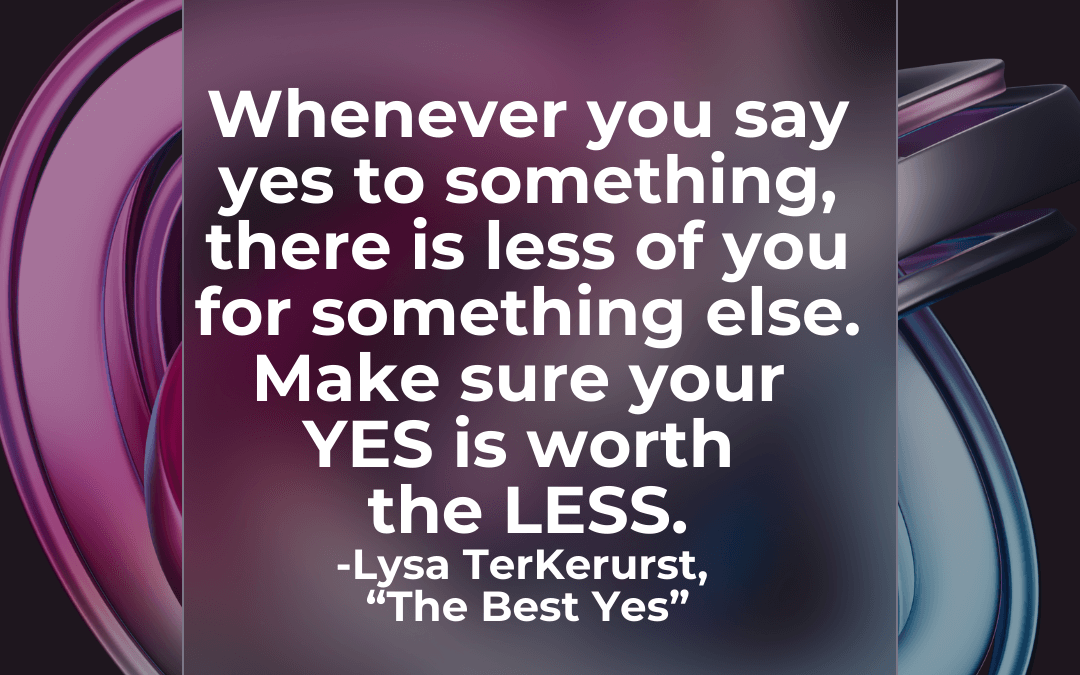
We’ve heard a lot about learning to say no, and rightly so, because we often say yes too much and take on too many responsibilities. It is no fun. However, that said, the real issue just might be that we’ve never learned to say yes effectively.
Remember, every yes has a cost. Minimally, it’s our time and energy; but also exacts from us our priority and focus. What happens when our time, energy and resources are overdrawn? We become overburdened, overwhelmed, which leads to stress and anxiety. Yep, your yeses are a cause of much of your stress.
Considerations of Yes
So how should you account for your yeses? Before you say yes, consider the following:
Capacity Constraints. When something new comes along, think about everything you’ve already committed to, including personal and work-related obligations. What constraints do you face, like tight due dates, conflicting priorities, and other shifting responsibilities? Unfortunately, adopting a FIFO (first in/first out) approach is seldom applicable. Before you say yes, discuss it first with your manager or partner, even if it’s only to let them know of your situation.
Expectations and Reliance. Saying yes creates expectations in others. People are relying on you to follow through. Are you at risk of letting them down? This includes not just clients, partners, or managers, but also your significant other, children, family, and friends.
Neuropsychology has taught us that the negative impact on others when we don’t meet an expectation is much greater and lasts longer than their satisfaction when we meet an expectation. This explains why missed expectations are much more significant and remembered than the times we come through.
Commit to Yes
Is it time for you to better account for your yeses? After all, you have to protect your reputation. Learn to say yes so that you can make good on ALL of them. Everyone is depending on you.
Read Related Blogs:
A Fractured Partner Group
Stressed A professional administrator from a CPA firm visited our sponsor table last week at the CPAFMA Connections 2024 conference in Savannah, Georgia. Her discouragement was evident from her slumped shoulders and shuffling walk. She immediately shared her...

Equipping Managers To Perform
The Transition We learn so much from our coaching clients, like what they really want, what concerns them and what holds them back. Over the years, our experience has revealed a common theme—that transitioning from staff performer to project manager is one of the most...

Be A Strong Supervisor
Yes One of the most difficult situations we can encounter in life is wanting to do well but it’s not coming together. We struggle because there is a gap between our capabilities and what is required to succeed. We encounter this situation in sports, academics, music...